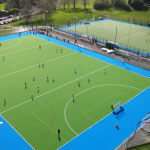
Field hockey is an extremely popular sport worldwide, which has traditionally been played on natural turf. However, advancements in artificial turf systems have led to these surfaces becoming the gold standard for hockey and the industry now prefers synthetic surfaces, rather than the more traditional, natural grass pitches. Let’s delve into the shift towards artificial turf in hockey, looking at the factors that have driven this change and the advantages of artificial turf surfaces.
The Rise of Artificial Turf in Hockey
In recent years, the world of hockey has seen a shift from traditional natural grass surfaces to the innovative realm of artificial turf. The transformation has addressed the limitations that come with natural grass, with artificial turf providing a purpose-built surface, created to meet the unique demands of the sport. These surfaces are sophisticated and have revolutionised the game in many ways.
The rise of artificial turf in hockey has sparked a conversation worldwide about the advantages and possibilities that come with these technological advancements. As the demand for high-performance facilities increases, hockey clubs around the world are recognising the value of artificial turf in creating an environment where the sport can be played at its best. Unlike natural grass, which is susceptible to weather changes, artificial turf is reliable, uniform and durable. It has a wide range of benefits, let’s take a closer look.

The Advantages of Artificial Turf
Durable & Weather-proof
Artificial grass pitches of all types can last for years, providing they’ve been properly maintained. They’re highly durable and can withstand heavy usage, whereas natural grass would struggle with a large amount of footfall on a daily basis. Furthermore, artificial grass can be used in all weather conditions, from rain to snow. Natural grass would quickly become waterlogged in the rain, whereas artificial turf pitches are free-draining, removing water from the surface and preventing it from pooling. Natural grass would also be unusable in snow or frost, as the surface would quickly become frozen over and very unsafe to use. Artificial grass, however, can still be used in the colder winter months.
Low Maintenance
While maintenance is incredibly important if you have an artificial grass hockey pitch, they are generally much easier to maintain than a natural grass surface. Real grass requires regular mowing, watering and fertilising to ensure it keeps growing in the best way possible. Artificial grass on the other hand, simply requires regular brushing. To keep your synthetic grass pitch looking its best and performing well, you need to clear the court of any debris such as leaves and twigs, and give it a brush to ensure the fibres are not becoming impacted.
Safer For Players
The inbuilt drainage systems in synthetic grass surfaces remove standing water and absorb moisture, making sure the pitch isn’t slippery. This reduces the risk of players falling due to water on the surface. Furthermore, artificial turf hockey surfaces have a shockpad, which will help to provide a softer landing and lesser chance of serious injury if a player does fall.
Consistent
Artificial grass provides a more consistent surface than natural grass, which is very beneficial when playing hockey. The height and thickness of each blade of synthetic grass is perfectly uniform, making for consistent and predictable ball behaviour. Players will be able to know how the ball will behave, and they will be able to better plan their strategies, with an understanding of how the ball will move. On a natural grass hockey pitch, the surface can become bumpy and uneven over time, which will greatly impact how the ball moves across the pitch.
Misconceptions & Myths of Artificial Turf
There are some misconceptions surrounding the use for hockey, such as concerns around safety and the potential of players getting injured. However, extensive research and real-world experiences have shown that modern turf sports systems are designed with player safety as a top priority. The surfaces are engineered to provide a consistent and forgiving playing field, significantly reducing the risk of injuries compared to natural grass.
Moreover, some sceptics question the adaptability of artificial turf to different playing styles or levels of the game. Modern turf is designed with versatility in mind, catering to various skill levels and playing preferences. From professional leagues to community matches, artificial turf provides a consistent and adaptable surface that enhances the overall hockey experience for players at all levels.

At AS Sports, we offer a range of synthetic hockey surfaces. From sand-dressed and sand-filled surfaces, perfect for schools looking for a multi-sport surface, to the water-based surfaces favoured by professional and semi-pro clubs. Check out our hockey page to find out more on how you could also have an industry leading hockey pitch.