One of the many reasons people choose artificial grass for their sports surface rather than natural turf is the durability, weather-proof qualities, and lower maintenance requirements. It has year-round resilience and can be used in all weather conditions, however, it is crucial to maintain your pitch to keep it looking good and performing well. This maintenance is very important in the colder months, but it does not need to be a large undertaking. Let’s take a closer look at why weatherproof sports surfaces are so beneficial, and how you can easily maintain them to keep players safe year-round.
Why Weatherproof Sports Surfaces Matter
With the UK’s famously unpredictable weather, having a sports surface that can stand up to year-round rain, frost, and heavy use is essential. Traditional natural grass pitches struggle to cope with prolonged wet weather, often becoming waterlogged and muggy. As a result, pitches become unsafe for use, matches are cancelled and training time is reduced.
Weatherproof sports surfaces are designed to overcome these challenges. Whether it’s a 3G football pitch, a polymeric court, or a porous macadam MUGA, modern sports systems are engineered to drain quickly, stay safe underfoot and stay playable in conditions that would shut down a natural surface. For schools, clubs, and community facilities, this reliability makes a significant difference.
Weatherproof Surface Options
There are a range of artificial sports surfaces available, each best suited to specific sports and with a range of unique benefits. Here’s a breakdown of the weatherproof sports surface options available today:
3G Artificial Turf
A popular choice for football and rugby, 3G turf combines synthetic fibres and infill to create a durable, natural-feeling surface. Its engineered drainage systems help the pitch lose water quickly, ensuring consistent play even during heavy rain. It’s ideal for year-round training and match play.
Sand-Dressed & Sand-Filled Turf
Perfect for hockey and multi-sport facilities, sand-based artificial pitches are designed for fast play, controlled ball roll, and excellent grip. Their porous base layers and drainage make them highly resilient in wet conditions.
Porous Macadam
A favourite for tennis courts, netball courts and MUGAs, porous macadam is built to let rainwater pass through the surface rather than pooling on top. This keeps the area playable and reduces slip risks during wet weather.
Polymeric Rubber
Often used for multi-sport courts and playgrounds, polymeric surfaces offer a cushioned, non-slip finish that performs well in rain and frost. Their textured top layer provides reliable grip for running and fast changes of direction.
Can Frost and Snow Damage Artificial Grass?
Artificial grass is far more resilient than natural turf, and frost won’t damage or weaken the synthetic fibres. In most cases, you can simply leave frost or a light covering of snow to melt and drain naturally. In fact, we strongly advise against using anti-freeze products as they can harm the surface, and salt can block the drainage system.
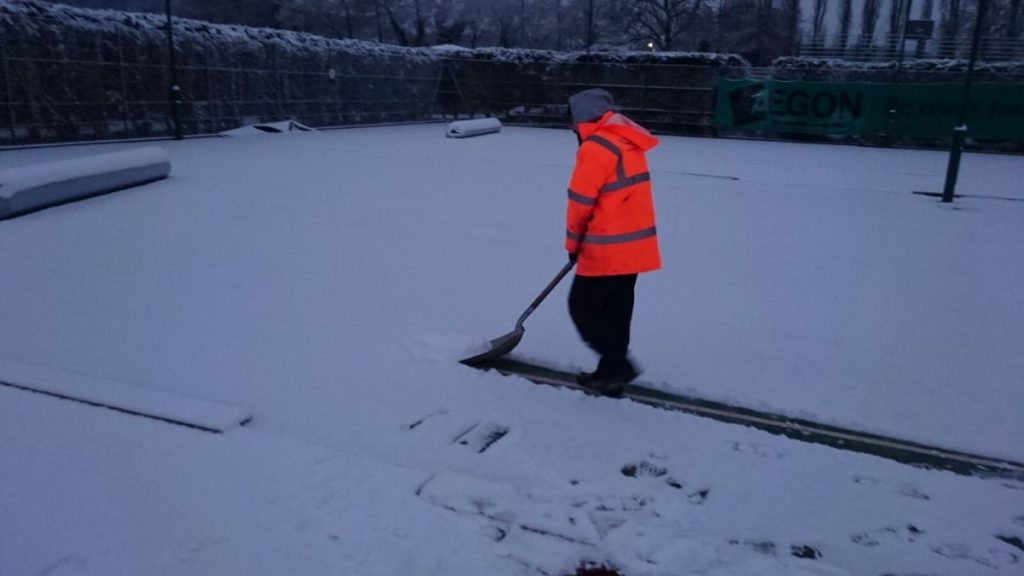
If your pitch is covered by a thicker layer of snow, it’s best to remove it gently using a plastic shovel. Avoid metal shovels, which can easily damage the fibres. Leaving heavy snow to sit for too long can cause it to compact into ice, increasing the risk of fibre damage. A quick, careful clear-up makes all the difference.
Maintenance & Care: Keeping Your Surface Weatherproof Over Time
Proper maintenance is key to keeping your artificial grass in top condition and extending its lifespan. By carrying out regular upkeep throughout the year, you can reduce the risk of damage, even in colder weather. The good news is that routine maintenance doesn’t have to be a major undertaking.
Remove debris regularly, as leaves, twigs, and other debris can block drainage, cause water to pool, and encourage weeds, moss, or mould growth. Check your pitch daily and clear debris using a blower or stiff brush.
Brush your surface consistently. Brushing is essential for keeping fibres upright and ensuring infill is evenly distributed. Use a stiff, natural bristle brush and continue this practice all year round, including through the colder months. Regular brushing helps maintain performance, appearance, and longevity of your artificial grass.
Keeping your artificial grass well-maintained ensures it stays safe, durable, and high-performing all year round. Small, regular efforts go a long way in protecting your investment.
If you’re considering a new sports surface or want advice on maintaining your existing pitch, get in touch today. We’re here to help you get the best from your surface.